
AOSARS Books · Research & Data Analysis
Own the e-book that moves your thesis forward.
When you are stuck on method, analysis or writing, you need an authoritative reference you can open right now. These are affordable, Africa-relevant e-books you download at once and keep for good. Learn from them, cite them, and produce defensible work without waiting or paying Western textbook prices.
Instant PDF download · Pay in your own currency, on mobile money · Curated for African scholars
The collection
What the collection covers, across the whole research journey.
A thesis rarely stalls on ideas. It stalls on the practical work around them: framing a method, running an analysis, and writing to examiner standard. These eight books cover exactly that, as references you open the moment you are stuck and keep for good. Open any theme below to see what it addresses.
Research methodology and design
A thesis moves when its design is sound. Two methodology handbooks take you from the problem statement to a defensible design, across quantitative, qualitative and mixed approaches, set in the African social-science context.
Why this matters: Depth in method is what lets you move fast later, because nothing has to be redone.
What you will be able to do
- Frame the background, problem, objectives, questions and hypotheses
- Choose among research philosophies, from positivism to interpretivism and pragmatism
- Select a design: survey, case study, longitudinal, experimental and more
- Match population, sampling technique and sample-size formulas to your study
- Establish the reliability and validity of your instruments
In this collection: Essentials of Research Methodology; A Handbook for Research Methodology
Browse the related booksStatistical analysis
Analysis is a discipline of its own, and it does not need a statistics degree. Three plain-language guides walk social-science researchers through the procedures examiners expect, with SPSS output read line by line.
Why this matters: A correct, well-read analysis is what turns your data into a defensible contribution.
What you will be able to do
- Run linear regression and read a typical SPSS output correctly
- Test mediation with Baron and Kenny, the Sobel test and bootstrapping
- Test moderation with ANOVA and hierarchical regression
- Probe interactions with floodlight and spotlight analysis in the Hayes PROCESS macro
- Write up and defend your analysis with confidence
In this collection: Linear Regression Analysis; Mediation Analysis; Moderation Analysis
Browse the related booksThesis writing
Good writing is built, not waited for. Written by an experienced postgraduate supervisor, this guide takes you through every stage of thesis and dissertation writing to examiner standard.
Why this matters: Clear structure and argument let your work be judged on its substance.
What you will be able to do
- Master the fundamentals of academic and scholarly writing
- Structure theses, dissertations and research projects
- Build strong arguments and critical thinking into each chapter
- Conduct an effective literature review and cite with integrity
- Manage your time and overcome common thesis challenges
In this collection: Essentials of Thesis Writing for Postgraduate Students
Browse the related booksScholarly writing and publishing
Your research is worth more than one bound copy. This guide covers academic communication end to end, from language and citation to choosing where and how to publish.
Why this matters: Publication carries your work, and your name, beyond the examination.
What you will be able to do
- Sharpen academic language and apply citation styles correctly
- Source reference materials and manage your citations
- Choose between subscription and open-access publishing models
- Avoid predatory publishers and read academic metrics with confidence
- Craft research work that contributes to the scholarly community
In this collection: Essentials of Scholarly Writing and Publishing
Browse the related booksChoosing a research topic
Many theses stall before they truly begin, on the topic. This stage helps you turn a broad interest into a focused, examinable question worth doing, in any discipline and any country, then draw on thousands of worked examples you can adapt to your own context.
Why this matters: A viable, well-scoped topic is the fastest way to a moving thesis.
What you will be able to do
- Turn a broad interest into a focused, researchable problem
- Test whether a topic has the scope and evidence to sustain a thesis
- Choose from thousands of worked topic examples across the major business fields
- Adapt any example to your own discipline, country and institution
- Position your study against a real gap, not a hunch
In this collection: Business Research Topics for Master's and Doctoral Studies in East Africa
Browse the related booksCurated for African scholars
The whole collection is distilled from the world's leading publishers and customised for the African research landscape, with real thesis examples and prices set for local access.
Why this matters: A quality reference set, made affordable and African, is rare and worth owning.
What you will be able to do
- Learn from methods written for African scholars, not imported wholesale
- Work with real, Africa-relevant thesis examples
- Pay in your own currency, priced for local access
- Download every title at once and keep it offline for good
- Reference and cite the collection across this thesis and the next
In this collection: Browse all eight titles
Browse the related booksBuilt to be owned, not rented.
Every title here is a reference you download at once and keep for good. Open it, learn from it and cite it, offline, on any device, at your own pace. It is yours to use on this thesis and every project after it.
The catalogue
Methodology
Methodology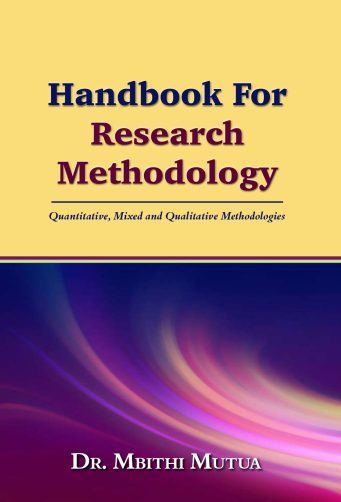
Writing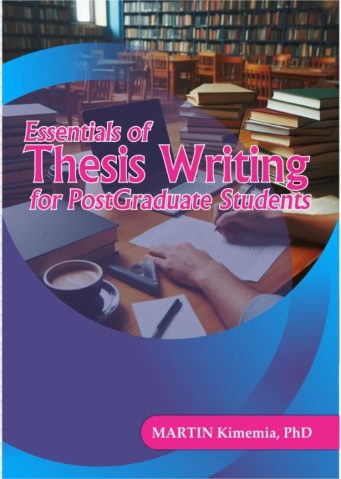
Writing
Writing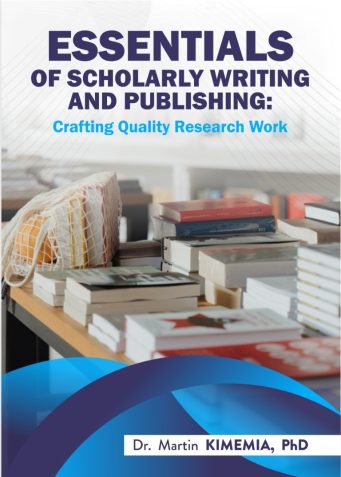
Analysis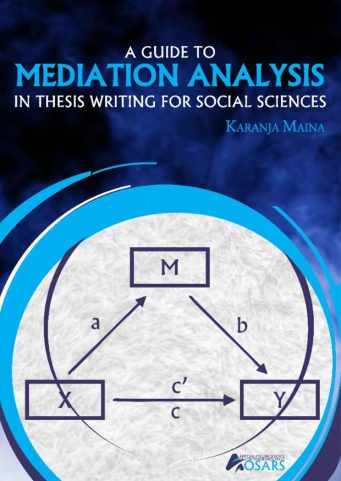
Analysis
Analysis
Every e-book, one download away.
Filter by theme or search by keyword. Each title is an instant PDF download, curated for African scholars, yours to keep and cite.
Showing 8 of 8 books
A Handbook For Research Methodology: Quantitative, Mixed and Qualitative Methodologies
Essentials of Thesis Writing for Postgraduate Students
Business Research Topics for Master's and Doctoral Studies in East Africa
Essentials of Scholarly Writing and Publishing: Crafting Quality Research Work
A Guide to Mediation Analysis in Thesis Writing for Social Sciences
A Guide to Linear Regression Analysis in Thesis Writing for Social Sciences
A Guide to Moderation Analysis in Thesis Writing for Social Sciences
No books in this filter yet.
What the books help you do
From a stuck chapter to a defensible thesis.
From framing a study to publishing it, research moves through clear stages. Across the collection, each book supports a stage of that journey, so you always have an authoritative reference open at the point you are stuck. Here is what the books help you do.
Stage 1
Design your study
A thesis moves quickly when its design is sound from the very start. Two methodology handbooks take you from a researchable problem to a design an examiner will accept. You learn to write the introduction properly, with background, statement of the problem, objectives, research questions, hypotheses and justification, and to see how variables shape the entire study.
From there you work through the major research philosophies, positivism, interpretivism, pragmatism, constructivism and realism, and compare research designs side by side: descriptive, case study, correlational, survey, cross-sectional, longitudinal and experimental. You define your target population, choose a probability or non-probability sampling technique, size your sample with the right formula, and build reliable, valid instruments and questionnaires, from response scales to piloting and online delivery.
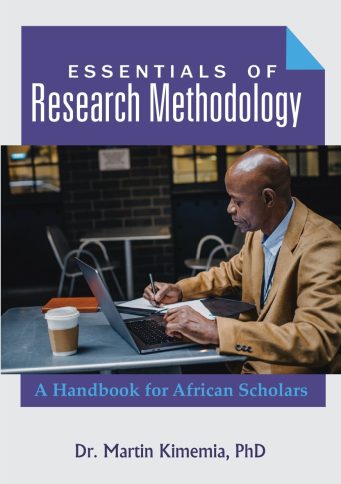
- Essentials of Research Methodology: A Handbook for African ScholarsTen chapters, from research philosophies and designs to population, sampling techniques, reliability, validity and questionnaire design.
- A Handbook For Research MethodologyQuantitative, mixed and qualitative methodologies in one volume, with literature reviews, conceptual frameworks, analysis, referencing and research ethics.
Stage 2
Choose your topic
Many theses stall before they truly begin, on the choice of topic. This stage helps you start from a question that is viable, examinable and genuinely worth doing, whatever your discipline and wherever you study. You learn to turn a broad interest into a focused, researchable problem, to test whether it carries enough scope and evidence to sustain a full thesis, and to position it against a real gap rather than a hunch.
To make that concrete, the collection includes a dedicated bank of thousands of worked topic examples across the major business fields, from accounting, finance and marketing to entrepreneurship, human resources and technology. Each example is a starting point you can adapt to your own field, your own country and your own institution's expectations, and align to the development priorities that matter where you research.
- Business Research Topics for Master's and Doctoral StudiesThousands of worked topic examples across the major business fields, each one a starting point you adapt to your own discipline and country.
Stage 3
Analyse your data
Analysis is a discipline of its own, and these guides prove it does not need a statistics degree. They are written in plain language for social scientists, with the mathematics kept in service of the meaning. You begin with linear regression, the building block for almost everything else, learning its types, reading a full SPSS output, and interpreting each statistic the way an examiner expects.
You then handle mediation, conceptualising the mediating variable and testing it with the Baron and Kenny methods, the Sobel test and bootstrapping. You move on to moderation, understanding interaction effects and testing them with ANOVA and hierarchical regression, plus floodlight and spotlight analysis in the Hayes PROCESS macro. Throughout, the focus stays on running each procedure correctly, presenting it clearly, and defending it with confidence.
- A Guide to Linear Regression AnalysisTypes of regression, a full SPSS output and detailed interpretation, plus how to write up and defend it.
- A Guide to Mediation AnalysisThe mediating variable and its assumptions, tested with Baron and Kenny, the Sobel test and bootstrapping.
- A Guide to Moderation AnalysisModeration and interaction effects, with ANOVA, hierarchical regression and floodlight and spotlight analysis in the Hayes PROCESS macro.
Stage 4
Write your thesis
Good academic writing is built, not waited for, and this guide, written by an experienced postgraduate supervisor, shows you how at every stage. You start with the fundamentals of academic and scholarly writing, then learn to structure theses, dissertations and research projects so each chapter does its job and the whole argument holds together.
You develop the strong arguments and critical thinking examiners reward, and learn to conduct a literature review that frames your study rather than just listing sources. The guide covers citation, referencing and academic integrity, the discipline-specific conventions you are expected to follow, and practical time management for research done alongside a full workload. It closes with the common thesis challenges, and exactly how to overcome them.
- Essentials of Thesis Writing for Postgraduate StudentsBy Dr Martin Kimemia; proposal to final dissertation, with literature reviews, argument, citation, integrity and time management.
Stage 5
Publish your work
Your research is worth more than a single bound copy, and this guide carries you from a strong chapter to published, cited work. You sharpen academic language and apply citation styles correctly, source quality reference materials, and manage your citations cleanly as you write.
You then navigate the publishing landscape itself: the traditional subscription model and the open-access model, and how to choose between them. You learn to recognise and avoid predatory publishers, a real risk for early-career researchers, and to read academic metrics so you can judge journals and track your impact. Written for first-time authors and seasoned scholars alike, it helps you contribute work that carries your name well beyond the examination.
- Essentials of Scholarly Writing and PublishingAcademic language and citation, sourcing and managing references, publishing models, avoiding predatory publishers and reading academic metrics.
Stage 6
Own the collection
The whole collection is distilled from the world's leading publishers and customised for the African research landscape, then priced for real access. Together the eight e-books carry you across the full journey: designing a study, choosing a topic, analysing data, writing to examiner standard, and publishing what you find.
Every title is written in clear, practical language rather than abstract theory, with worked examples you can reuse on your own project. You download each one at once, keep it offline on any device, and return to it as often as you need. Because you own the files rather than rent access, the collection becomes a personal reference library you can cite from for years, on this thesis and every project after it.
- The complete collectionAll eight e-books, downloaded at once and kept for good, one file per title.
- Curated for African scholarsLeading-publisher content made for the African research landscape, with real examples and local pricing.
Plays through on its own. Hover to pause, or click any stage to jump.
A view of the research journey. Each book gives you an authoritative reference for its stage, curated for African scholars.
What every book gives you
Built to one clear standard.
Every book follows the same promise, so you know exactly what you get before you buy.
Instant PDFAny deviceYours to keepCite as you writeAfrican context
What you gain
Answer the question that has you stuck, and keep the reference for good.
The scarcest resource in postgraduate work is time, lost to waiting, false starts and chapters sent back. An authoritative e-book you open right now cuts that, and it stays on your device long after this thesis is bound.
01
Answer the question that has you stuck, today
The biggest cost in a thesis is waiting for help. Open the right book at once, find the answer to the method, analysis or writing problem in front of you, and keep moving the same day.
02
A defensible method and analysis
Choose and justify a design, then run regression, mediation or moderation correctly and read the output the way examiners expect, with an authoritative reference at hand.
03
Source and appraise evidence
Choose a viable topic and judge what truly belongs in serious academic work, so every chapter rests on firm ground and a real gap, not a hunch.
04
Write so chapters come back less
Structure argument and prose to the standard examiners and reviewers respect, so chapters return for correction far less and the thesis keeps moving.
05
A reference you keep and cite
Download once and keep it offline for good, a file you open and cite on this thesis and every research project that follows.
Why AOSARS
Good research references are expensive. AOSARS makes them affordable and African.
Quality method, analysis and writing references are costly and often Western-centric, and access is slow when you need the answer now. AOSARS closes that gap with affordable, instant-download books, distilled from leading publishers and customised for the African research landscape. Built in Africa since 2016, priced in your own currency, and yours to keep.

Built by practitionersFor African postgraduates, since 2016
Stop paying Western textbook prices
Quality references cost too much and rarely speak to the African research landscape. Our books are affordable, instant to download, and priced in your own currency.
Written by people who do the work
These books are written by practising researchers who publish peer-reviewed work and write on research methods, not repackaged lecture notes.
Methods and examples you will not find elsewhere
Our proprietary LNPAMM and Sieve-and-Write methodologies, and real African thesis examples, turn vague advice into a repeatable way of working.
Curated from the world's leading publishers
Distilled from leading publishers and made for African scholars, so a reference you download once serves this degree and the next.
400+researchers taught
2016building applied skills since
Proprietary methodsLNPAMM & Sieve-and-Write
What scholars say
From researchers using the books.
No commitment yet
Not sure which book to start with? Ask us first.
Two low-pressure ways to explore before you buy: ask us to call you back on WhatsApp at a time that suits you, or book a short Google Meet call to talk it through and match a book to your research together on screen. Neither commits you to anything.
- It costs nothing to explore
- You speak with the team, not a salesperson
- An honest fit check, with no pressure to buy
Ask us to call you back
Leave your details and the time that suits you. We call you on WhatsApp, so it costs you nothing.
Book a fit call on Google Meet
Pick a slot yourself and we meet on video. We can talk it through and, if you like, look at your work together on screen.
Face to face on videoShare your screenNo obligation
Book your Google Meet
Common questions
Answers, before you ask.
The questions postgraduate researchers ask most before buying. If yours is not here, ask before you pay.
Still have a question?
info@aosars.com
Chat on WhatsApp: +254 724 800 626
We answer every enquiry personally, usually within a day, before you commit to anything.
Will a book write my thesis for me? +
No. These are references you learn from and cite. They show you how to do the work to a high standard. The work, and the words on the page, stay yours throughout.
What format are the books, and how do I get them? +
Every book is a PDF. After payment you download it at once; nothing is shipped and there is no wait. The file is yours to keep.
Can I read them on my phone and offline? +
Yes. Read on a phone, tablet or computer, online or offline. Once downloaded, the book stays on your device for good.
Are they relevant outside Kenya and East Africa? +
Yes. The collection is pan-African and the methods apply anywhere. The business topics book is East Africa focused by design, for local relevance.
How do I pay, and in what currency? +
You buy through secure checkout. Prices show in your local currency by your location (KES, NGN, GHS and more), and that is the currency you pay in, by mobile money, card or PayPal.
Do the analysis guides need special software? +
No. They teach the method and interpretation, and read well alongside tools you already use, such as SPSS and the PROCESS macro. You supply the software.
Can my library or department buy multiple copies? +
Yes. Email info@aosars.com or message the AOSARS WhatsApp line with the titles and the number of copies you need, and the team will arrange licences and billing for your institution.
Do you offer refunds on digital downloads? +
Digital downloads are delivered instantly, so please contact AOSARS before buying if you are unsure a book fits your needs. We will confirm our digital goods policy for you.
Start today
Your next chapter is one download away. Open the book you need.
Pick one book today and turn the hardest part of your research into a reference you keep for good.
Pay in your local currency on mobile money, card or PayPal. Instant PDF download, yours to keep and cite.